The New Zero Headcount Managers
takeawayWorking with AI isn’t entirely a new skill set. It has a huge overlap with management. Every engineer now manages a team of agents, playfully coined here as “zero headcount managers”.
Everyone in tech is franticallyAnd I don’t think frantic is the wrong word here.As demonstrated by viral memes like this one (opens in a new tab). learning what we are collectively calling “AI skills”.
Well, learning and having a vigorous debate about all the microscopic details.
Debating about tool integration:
- “MCP!”
- “CLIs!”
- “
bashandcurl!” - “it doesn’t matter as long as you Codemode! (opens in a new tab)!”




Debating about inputs:
- “Prompt engineering!”
- “Context engineering!”
- “Actually, it’s all about loops (opens in a new tab).“There are only two hard things in Computer Science: cache invalidation and naming things”Maybe naming things isn’t hard in computer science, if we weren’t always redefining things that are mostly the same in the ways that actually matter..”



Debating about harnesses:
- “Official harnesses from the frontier labs!”Too many folks are falling for the labs on this one that their models work so much better in their harness, and you’ll really only get the authentic experience using their end-to-end stack.In what universe would the labs not say this?
- “Open source and minimal bloat!”
- “Application-specific harnesses are going to become the norm, get onboard. (opens in a new tab)”Steve Yegge may be right on this.



I’m not saying these details don’t matter, they do! They matter a lot in fact!
In my current role, my team actually owns a lot of this stuff. And it’s genuinely fun and interesting how all of these details can have a massive impact on code quality, model capabilities, token cost and a bunch of other variables.
However, the industry’s attention feels hyper-focused on the technical details. I don’t think there’s enough productiveThere is plenty of p(doom) attention of course. There is also a lot of “early stages of grief” attention out there too.That’s all fine of course, but given we all have bills to pay I’m much more interested in solution-oriented attention on this topic. attention being spent figuring out what’s happening to the job itself and what we should do about that.We should put attention on the places that have the most potential for impact, the most opportunity.Sometimes in this industry, it feels like watching someone optimizing string parsing logic in a request that spends most of its time reading from a table with no index.Cut to Amdahl’s law (opens in a new tab).
Let’s play a game.
The quiz below has extremely common situations that happen in software companies. Your goal is to say whether each situation is a management problem, or an engineer working with AI problem.
Spoiler alert if you skipped the quiz…
The answer to all of the questions is both.
Some of you are thinking “duh!”.
For those that aren’t: Test me. Go find a manager and an IC running agents all day, and let me know if you find a meaningfully different result.
A large portion of their day-to-day job is increasingly rapidly resembling the work of an engineering manager, but with none of the downsidesOr upsides.It’s so fun promoting people, celebrating their wins, seeing someone grow and develop their skills. High highs and low lows as they say. of actual human people management.
As the cheekyAm I using this word right? Doing my best to engage with the local culture. quiz above demonstrates, when you start considering the parallels, the overlap is a bit staggering:
- Delegating effectively
- Managing permissions and approvals
- Overseeing multiple work items in parallel
- Watching out for sycophancy
- Verification of “others” work
- Picking the proper outcomes, watching out for gaming
- Fixing root cause behind repeated mistakes
- Splitting and sequencing work
- Deciding when to delegate and when to do it yourself
- Finding satisfaction in work you didn’t build
- Owning results you didn’t as-directly produce
Working with agents/Managing engineers looks something like the following:
“turning a fuzzy goal into a clear ask, deciding if it’s even worth handing off, and then handing it off with enough context to get it right while deciding how much rope to give and approving the things that need approval without stifling autonomy too much or becoming the bottleneck while you also keep several things moving at once in the right order without them tripping over each other…
and then in-between wrapping up various milestones you verify the parts that matter but only the parts that matter because otherwise there would be way too much and it’s all you’d ever do, and besides the work itself you’re also likely checking various metrics and ensuring they moved for the right reasons, and no major unintended externalities happened, while you get feedback on the next thing and try to ensure you get real honesty instead of sycophancy, and then periodically fixing the situation when the same mistake keeps happening while tracking progress and knowing when to step in and when not to…
and then at the end of the day, owning the outcomes, learning and iterating, and somehow feeling good about a week of work you didn’t build yourself.”

Oh.. just doing that. No biggie.
Managing agents isn’t managing humans, but it’s not just using tools either
Of course, a lot still doesn’t overlap.
Management has a lot of very human concerns:
- managing team morale
- driving career development
- handling conflict between individuals or teams
- assessing, designing and managing incentivesProbably the most under-rated management skill of all, but that’s another post
- coaching and mentoring
- balancing intrinsic motivators against business needs
“Zero headcount managers” don’t have to do any of this.
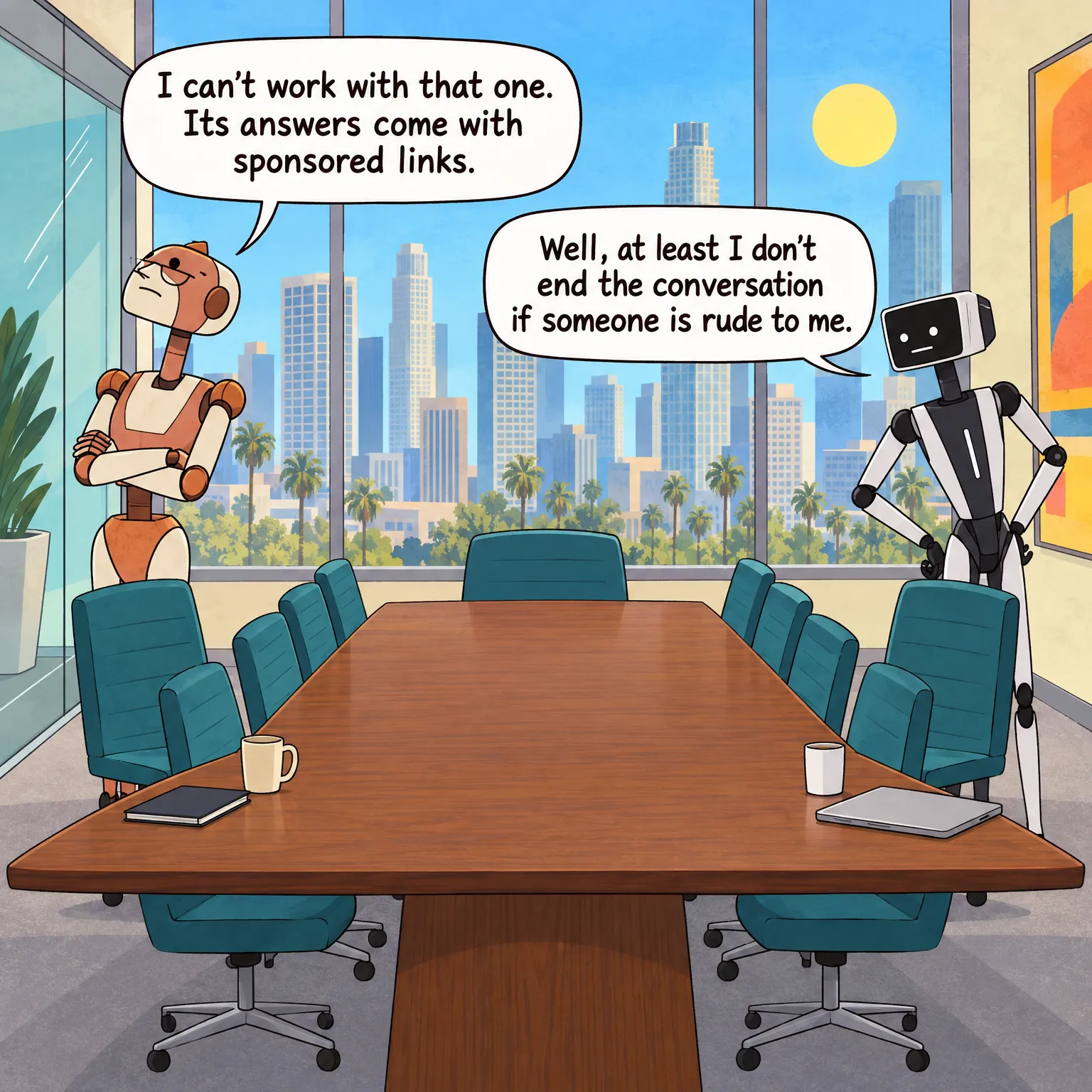
And I’m also not saying we should further anthropomorphize our agents, or teach them to do “Agile”.Which the industry never got right, but that’s for another post.
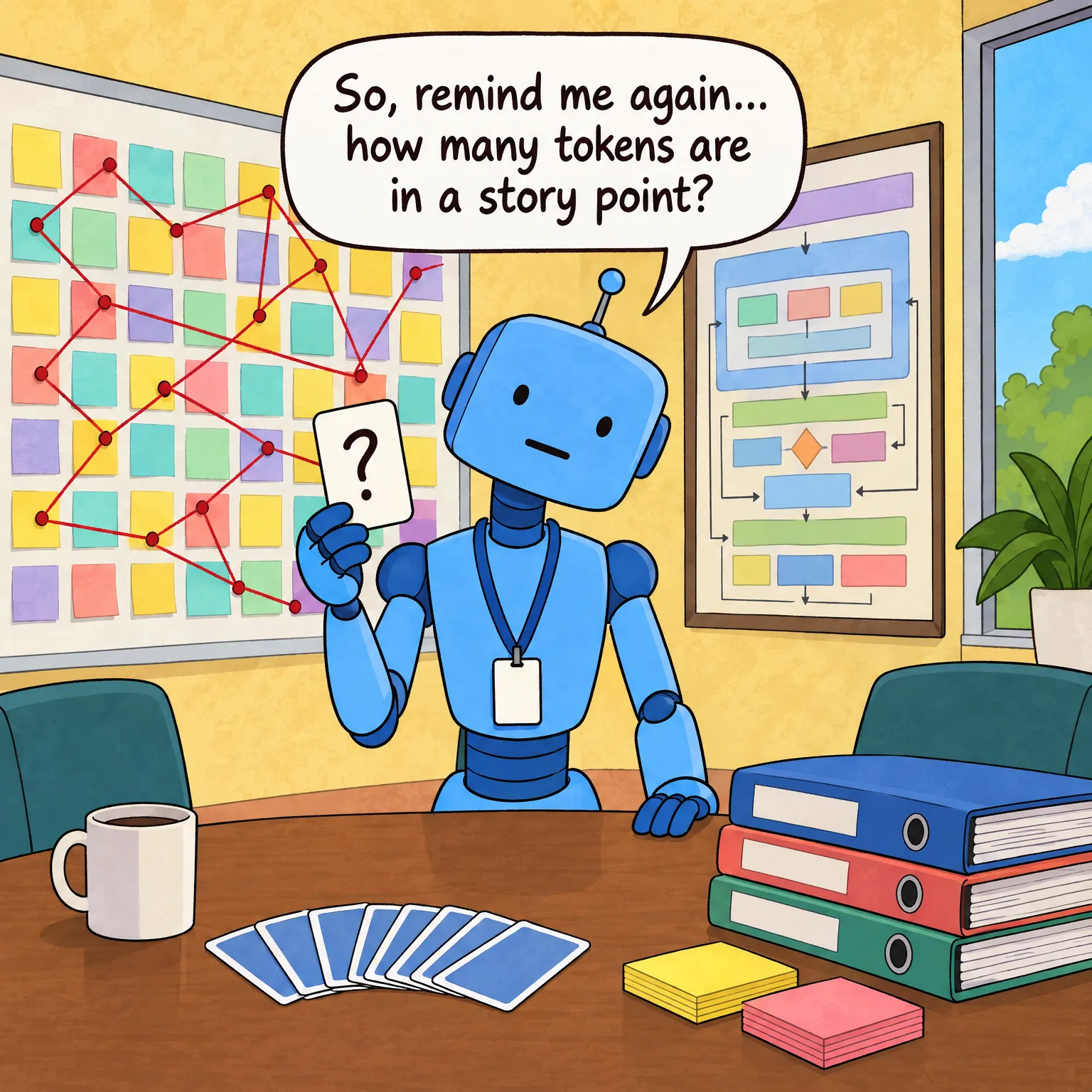
However, AI is not just another tool. Working with agents in 2026 is like having a bizarre genius alien intern that doesn’t need to sleep but is also impressively dumb at times.
That’s certainly more human-shaped than tool-shaped.
So what?
Okay, so engineers are all zero headcount managers now. Why does that make any difference and what does that mean for me?
Some engineers are loving it
Perhaps you have heard or said one of these in the past 6 months.
- “I fixed all of the edge-case css animation jank in the new UI. It only took twenty minutes and I didn’t have to do any miserable CSS spelunking.”
- “So I built a few prototypes last week, found a bunch of issues with the original requirements, built a few more and now I’m extremely confident we’ve got the right shape for this thing.”
- “Did it really manage to do that? Holy sh*t that’s crazy, well I guess I’m done early for the day.”




But some engineers are truly not having a good time
Perhaps you have heard or said one of these in the past 6 months.
- “I told this f*cking LLM what to do but no… it just does something else!”
- “This context switching is completely frying my brain. Any semblance of flow state is gone. Agents are constantly waiting on my direction, interrupting me constantly.”
- “There’s no way I can move at this new agentic pace, while verifying every single piece of research and input context my harness is consuming… but somehow I am still responsible for incidents and bugs… how is this fair? Or sustainable?”




The gap between people’s experiences is obvious (opens in a new tab) to anyone in the industry. Even more concerning, folks I talk to at a bunch of different companies are all seeing that for some teams this gap is getting worse, not better.
You can even see the kinda-not-having-a-good-time-here-ness expressed in these viral Opus-assisted motion-graphics videos (opens in a new tab).
Let’s make things better. For everyone
We (engineers, managers, executives, whoever) should be putting a lot more energy and attention into making sure everyone is having a better time.
As cool and useful as the underlying tech isAnd it is way cool and way useful., the next shiny agentic engineering toolDon’t get me wrong, people are making awesome stuff here and I’m sure we’ll continue to see innovation here. Tools like Orca (opens in a new tab) are badass. is not going to make those struggling engineers suddenly deliver amazing results with AI.
We should use our collective pattern matching skills as an industry. Let’s recognize the frustrations and wins above are extremely similar to what managers see all the time.
Software Engineers: If you’re struggling
NewAnd seasoned managers struggle with these challenges too. Eventually they find the strategies that work for them and their current workplace context. Struggling now doesn’t mean you’re doomed to be bad at AI, or that your job will be a struggle from now until the end of time.
Non-obvious skills can be a problem. I’ve seen new managers quit because they can’t see the skillsets they need to develop. Instead they can only see the frustrating challenges surrounding them they can’t seem to impact. That’s exhausting and disempowering.
On the flipside, getting better at them once you start recognizing them is an enjoyable process for most people, and even if that’s not enjoyable in itself, most people want their job to be easier.
Ask a manager or leader you trust how they handle a new challenge you’re facing. Maybe they have an approach to rapid context switching that works for you. Maybe you know a very technical manager who’s always great at reviewing architecture specs, even before AI was much of a thing. Ask them how they’ve been managing to do that for years so efficiently.
This is not a silver bullet, but you’re likely to get some good ideas, or just rubberduckFun fact, my good friend (opens in a new tab)’s dad coined/invented rubber ducking (opens in a new tab).Note to self: I should give him a hard time about it more often. yourself into an improved solution.
Axe-sharpening and rust
You may be concerned about your technical skills getting rusty, and that causing major issues for you in the future.
Are some of your technical skills going to atrophy? Almost certainly. But I’m here to try to convince you that’s okay. Actually, not just okay, but positive.
The uncomfortable truth is that what it means to be a “non-rusty great technical engineer” has always shifted. While this is a bigger more rapid shift, it’s not an entirely new phenomenon. And you’ll be able to accomplish so much more than you ever could in the past, like upgrading from an abacus to a calculator.

Note: Accomplish more doesn’t have to mean ship more slop. It can even be removing code.As others have pointed out (opens in a new tab), the whole conversation on slop is embarrassingly one-sided.It’s never been easier to clean up code, add a test suite, refactor, decommission, alert and observe, optimize performance.
Do you want to improve your team’s runbooks to be easier to follow and always up to date? Doable. Maybe you want to spend less time reading email and chat to catch the one important actionable thing that day? Build an agent.
But the bubble
Let’s keep it honest here, these models are going to be at your fingertips now for good. And this is the worst they will ever be.
Even if the AI bubble pops, last year’s top models can already run (opens in a new tab) at 90+ tps on a gaming PC. And the cost per unit intelligence keeps dropping rapidly. We can’t rollback the clock globally.
So the right question to ask isn’t how to keep every old skill as sharp as can be. The right question to ask is which skills matter most in this new world. It’s healthyAlthough understandably sometimes painful to let go of some old skills to make room for new ones.
Software Engineers: If you’re doing great
Help your team/company in the areas they are struggling. Besides being the kind thing to do, it will be worth it for you in a perfectly selfish way.
Teams that lock-inAs my gen A niece would say will do more, better, faster. For you that means fewer things breaking when you are on-call, more positive vibes. If you have equity (stocks/options), you can impact them so much more by up-leveling those around you while you accomplish great things.All other things equal, assumes good company strategy, product customers want that you can sell, etc.
If you are on a team that isn’t quite getting it, be careful about holding yourself back too much on what you can achieve. It’s a bad idea to throttle yourself to an hour of real work a day to match the others on your team because they aren’t using AI yet.
Things are moving quickly in terms of model capabilities and much of the industry feels uncertain. It is the perfect time to demonstrate how much you can accomplish. Even if your current company doesn’t get that, I guarantee you your future one will. And if your current company isn’t using AI yet, I wouldn’t put money on them survivingOf course, it depends on the company, regulatory rules, etc. But in general, if they aren’t forward thinking enough to be using AI at least moderately at this point, I wouldn’t count on them being able to instantly pivot into doing that well when competitors come knocking.(Again, assuming there isn’t full regulatory capture or other reasons why your company is a unique snowflake.) so you should care about what the future companies think of you.
Finally, make sure to keep an eye on yourself. “Crushing it” can transform into burn out. AI expertise can devolve into token anxiety (opens in a new tab).
Engineering Leaders
Plenty of engineers are resistant to leveraging AI, or begrudgingly using itI’m sure that some are even maliciously complying (opens in a new tab). For instance, the Tokenmaxxing phenomenon has always felt a bit maliciously compliant to me.. And this is with the CEO of the most valuable company in the world saying, “You’re not going to lose your job to an AI, but you’re going to lose your job to someone who uses AI.” (opens in a new tab) It’s not the time to stick our head in the sand and ignore that or hope it magically goes away.
Industry leaders aren’t talking enough about the whys here, particularly the whys that we can actually influence.
If someone has hard reservations about using AI for ethical reasons, like environmental or social reasons, we aren’t going to change their mind. I don’t even think it’s right to try. We should still be clear about what the job expects. If their values and the job don’t match, the kind thing is to say so early and help them find something that fits, not to push them into working against what they believe.This may not be the nice thing to do, but it is the kind thing to do. And good leaders are kind but not necessarily nice.
But if it’s about how the new job feels or the new challenges that come along with it: we can work with that.
Even better, we are actually in a great position to help: we’ve been through very similar transitions.
If we think back to our first year as managers: what do we wish someone had told us? What strategies completely fell apart that we can warn our teams about? We can help them learn from our failures.
We need to lead with empathy, specifically cognitive empathy, which, “does not require you to feel what they feel; it requires you to accurately model their perspective (opens in a new tab).”
Find the engineers in your organizations who are doing amazing work and get their approach out of their heads into everyone else’s.
They are also by far, the most compelling evidence to the struggling engineers that they can get there too. Engineers are much more likely to keep an open-mind and engage with highly respected distinguished and principal engineers, than from managers perceived as trying to juice their delivery for a future promotion.

The job is the job
Cognitive empathy means understanding someone’s perspective, not agreeing with it. The frustration some engineers are feeling is absolutely understandable, but it doesn’t change the fact that this is their job now.
Teams where some engineers lean in to AI while others stay old-school are going to have major issues. Compensation, recognition and performance management will all get extremely weird. Slop-grenade complaints will be pitted against accusations that working with the non-AI-using-engineers is pointless since their agent can outperform them on most if not all metrics.
And that’s not to mention the business impact, your competitors, all the problems you could be solving for your customers that you just aren’t doing. And then of course, you are setting up those old-school engineers for failure in their role now, at one of the most uncertain times the industry has ever had.
There may be some roles or projects where AI can’t contribute much yet, and maybe you can carve-out something for them there. But, given that that area is shrinking, this is not a good long term strategy.
We should must absolutely support people, and be reasonably patient, but the job is the job.This is assuming you are working for a profitable company, with typical values and expectations. Maybe you are at a nonprofit, or a company that is anti-AI on some foundational ethical grounds.
It will (probably) get easier
We are working through a bizarre time in our industry.
But this new role should get easier. Ask any manager about their first year, and then ask about their fifth. We can make this easier faster, if we put some attention on the big picture here.
Plenty of engineers chose not to become managers when given the opportunity. Now they’re part-time zero headcount managers whether they wanted to be or not.
If attention really is all you need (opens in a new tab), let’s move some of ours.
The big picture here deserves as much of our attention and solutioning as the micro picture, like context engineering, how to configure your harness, or what makes a good skillEven if you disagree with my thesis here that managing agents is not that different than managing humans and that there are a ton of overlapping strategies and skills the broader point here still stands.Let’s spend more time helping people in the transition with the broader challenges happening with their newly-adjusted roles..
And to all the software engineers out there: Welcome to management.
Your headcount is zero, but also kind of infinite, and you’ve never been able to accomplish more than you can today.

- And I don’t think frantic is the wrong word here.As demonstrated by viral memes like this one (opens in a new tab).
- “There are only two hard things in Computer Science: cache invalidation and naming things”Maybe naming things isn’t hard in computer science, if we weren’t always redefining things that are mostly the same in the ways that actually matter.
- Too many folks are falling for the labs on this one that their models work so much better in their harness, and you’ll really only get the authentic experience using their end-to-end stack.In what universe would the labs not say this?
- Steve Yegge may be right on this.
- There is plenty of p(doom) attention of course. There is also a lot of “early stages of grief” attention out there too.That’s all fine of course, but given we all have bills to pay I’m much more interested in solution-oriented attention on this topic.
- We should put attention on the places that have the most potential for impact, the most opportunity.Sometimes in this industry, it feels like watching someone optimizing string parsing logic in a request that spends most of its time reading from a table with no index.Cut to Amdahl’s law (opens in a new tab).
- Or upsides.It’s so fun promoting people, celebrating their wins, seeing someone grow and develop their skills. High highs and low lows as they say.
- Am I using this word right? Doing my best to engage with the local culture.
- Probably the most under-rated management skill of all, but that’s another post
- Which the industry never got right, but that’s for another post.
- And it is way cool and way useful.
- Don’t get me wrong, people are making awesome stuff here and I’m sure we’ll continue to see innovation here. Tools like Orca (opens in a new tab) are badass.
- And seasoned
- Fun fact, my good friend (opens in a new tab)’s dad coined/invented rubber ducking (opens in a new tab).Note to self: I should give him a hard time about it more often.
- As others have pointed out (opens in a new tab), the whole conversation on slop is embarrassingly one-sided.It’s never been easier to clean up code, add a test suite, refactor, decommission, alert and observe, optimize performance.
- Although understandably sometimes painful
- As my gen A niece would say
- All other things equal, assumes good company strategy, product customers want that you can sell, etc.
- Of course, it depends on the company, regulatory rules, etc. But in general, if they aren’t forward thinking enough to be using AI at least moderately at this point, I wouldn’t count on them being able to instantly pivot into doing that well when competitors come knocking.(Again, assuming there isn’t full regulatory capture or other reasons why your company is a unique snowflake.)
- I’m sure that some are even maliciously complying (opens in a new tab). For instance, the Tokenmaxxing phenomenon has always felt a bit maliciously compliant to me.
- This may not be the nice thing to do, but it is the kind thing to do. And good leaders are kind but not necessarily nice.
- This is assuming you are working for a profitable company, with typical values and expectations. Maybe you are at a nonprofit, or a company that is anti-AI on some foundational ethical grounds.
- Even if you disagree with my thesis here that managing agents is not that different than managing humans and that there are a ton of overlapping strategies and skills the broader point here still stands.Let’s spend more time helping people in the transition with the broader challenges happening with their newly-adjusted roles.